
A Journey Through Astronomy, Calendars, and Church History
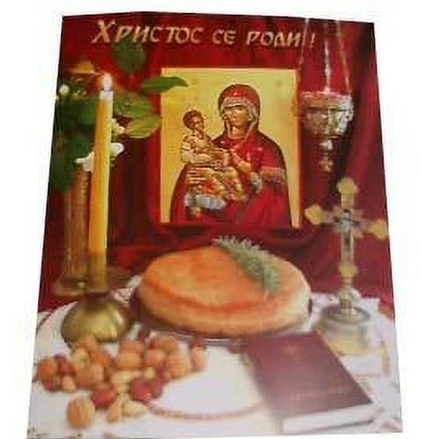
Being a Serbian company, Memento Vitae is in the middle of it’s festive season. I’m starting this particular post on January 6, which for us Serbs is Christmas Eve. Have you ever wondered where does this difference in calendars come from, and how come many other Orthodox churches celebrate Christmas on December 25? Last year, I have attended an astronomy course in Belgrade Astronomical Society, where I have learned quite a few interesting things, which I will try to summarize in this article.
This difference is the result of result of a long historical process in which astronomy, theology, politics, and tradition became deeply intertwined.
To understand why Serbian Orthodox Christians celebrate Christmas on January 7, one must step back nearly two millennia and follow the story of how humans tried to measure time, how the Church tried to preserve unity, and how calendars slowly drifted apart.

Astronomy and the Problem of Timekeeping Since 325 AD
At the heart of the calendar question lies astronomy. A calendar is, after all, humanity’s attempt to align civil life with the movements of the Sun, the Moon, and the stars.
The earliest Christian communities inherited the Julian calendar, introduced by Julius Caesar in 46 BC. This calendar assumed that a solar year (the time between planet Earth makes one full revolution around the Sun) lasts exactly 365.25 days, which is why it introduced a leap year every four years.
In reality, the solar year is slightly shorter. It lasts approximately 365.2422 days. The difference is small, just under 11 minutes per year, but over centuries it accumulates. By the fourth century AD, this discrepancy had already become noticeable.
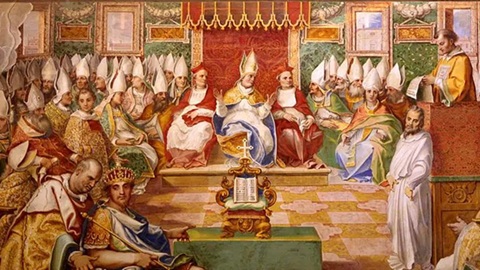
In 325 AD, the First Council of Nicaea was convened. One of its key tasks was to establish a unified method for calculating Easter, the most important feast in Christianity. Easter depends on both the solar year and the lunar cycle, and even small calendar errors caused disagreements between Christian communities.
At the time of the council, the vernal equinox was assumed to fall on March 21. The Church anchored its calculations to that date. However, because the Julian calendar was slightly inaccurate, the equinox slowly drifted backward. By the late Middle Ages, it was occurring around March 11.
This drift created a growing tension between astronomical reality and ecclesiastical tradition.
The Reform of Pope Gregory XIII
By the sixteenth century, the calendar discrepancy had grown to about 10 days. This was no longer a theoretical issue. It affected agricultural planning, feast days, and the calculation of Easter.
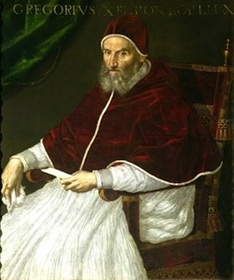
In 1582, Pope Gregory XIII introduced a calendar reform designed to correct this drift and prevent it from recurring. The reform had two main components:
Immediate correction – Ten days were removed from the calendar. In Catholic countries, Thursday, October 4, 1582, was followed by Friday, October 15, 1582.
Improved leap year rules – Leap years would still occur every four years, except for years of full century. Century years would only be leap years if divisible by 400. This adjustment brought the calendar much closer to the true solar year (though still was not perfectly aligned with it)
The result was the Gregorian calendar, which is still used by most of the world today.
From an astronomical standpoint, the reform was accurate and necessary. From a religious and political standpoint, it was deeply controversial.
How and When Christian Churches Adopted the Gregorian Calendar
The adoption of the Gregorian calendar did not happen all at once.
Catholic Kingdoms
Catholic states adopted the reform almost immediately, as it was promulgated by the Pope. Italy, Spain, Portugal, and Poland switched in 1582. France followed shortly thereafter.
Protestant Resistance
Protestant countries were initially suspicious. Accepting a calendar introduced by the Pope was seen as a religious concession. As a result, Protestant regions adopted the Gregorian calendar gradually, often centuries later.
Britain and its colonies switched only in 1752, skipping 11 days in the process. Sweden completed its transition in 1753. By the nineteenth century, most Protestant countries had adopted the new calendar for civil use.
Orthodox Christian World
The Orthodox Churches reacted differently. For them, the Gregorian reform was not merely an astronomical correction but a unilateral decision by the Roman Catholic Church, made without an ecumenical council.
As a result, the Orthodox world largely rejected the Gregorian calendar, continuing to use the Julian calendar for both civil and church purposes.
Over time, however, this created practical problems as Orthodox countries interacted with states using the Gregorian system.
The Orthodox Council and the Reformed Julian Calendar
In the early twentieth century, the calendar issue resurfaced within the Orthodox world.
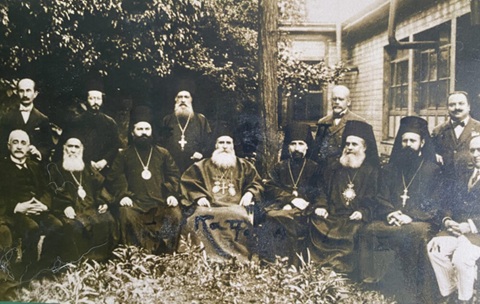
In 1923, an Orthodox Council was held in Constantinople under the leadership of Patriarch Meletius IV (Metaxakis). The goal was to address practical challenges facing Orthodox churches in a modern, interconnected world.
One of the key outcomes was the proposal of the Reformed Julian calendar.
What Is the Reformed Julian Calendar?
The Reformed Julian calendar corrects the astronomical inaccuracies of the original Julian system. For fixed feast days, such as Christmas, it aligns exactly with the Gregorian calendar until the year 2800. Please note that reformed Julian calendar was proposed by Serbian delegation to the Council, which was lead by Milutin Milanković, Serbian scientist who, by that time, was already renowned globally for his works explaining long-term cycles in Earth’s climate changes (so called Milanković cycles)
However, it preserves the traditional Orthodox method for calculating Easter, maintaining continuity with earlier practice.
In essence, it was a compromise. Astronomical accuracy on one side, liturgical tradition on the other.
Adoption and Division
Some Orthodox Churches adopted the Reformed Julian calendar, including:
-
The Ecumenical Patriarchate of Constantinople
-
The Greek Orthodox Church
-
The Romanian Orthodox Church
-
The Bulgarian Orthodox Church
Other churches, including the Serbian Orthodox Church, the Russian Orthodox Church, and the Georgian Orthodox Church, chose to retain the traditional Julian calendar.
This decision was motivated by concerns about unity, tradition, and the fear that calendar reform could lead to deeper theological divisions.
Why Serbs Still Celebrate Christmas on January 7
For Serbs, celebrating Christmas on January 7 is not primarily about astronomy or resistance to change. It is about continuity.
The Serbian Orthodox Church sees itself as a guardian of tradition, not only in theology but also in the rhythm of sacred time. The Julian calendar is part of that inherited rhythm, woven into centuries of liturgy, fasting cycles, and cultural customs.
Christmas Eve, or Badnje veče, the burning of the badnjak, and the communal character of the feast all derive their meaning from a calendar that connects present-day believers with their ancestors.
Changing the date would not simply move a celebration. It would alter a deeply embedded spiritual structure, oftenly based on differentiation of Orthodoxy towards Catholicism, which was key element of Serbian nationaly identity in wars of XX century.
Calendars are often perceived as neutral tools. In reality, they shape how societies experience time, memory, and meaning.
For the Serbian people, the Julian calendar became intertwined with historical survival under foreign rule, cultural preservation, and religious identity. Holding on to it was not only a theological choice but also a cultural one.
This is why, even today, when Serbia uses the Gregorian calendar for civil life, the Church continues to mark its feasts according to the Julian system.
Two calendars coexist, serving different purposes.
… the time does not stand still
The trouble is – the difference of 13 days (as in Julian vs Gregorian calendar) is not static. Almost each century (except in years 2000, 2400, 2800 etc) it grows for one day.
That means – if Serbian Orthodox church does not accept reformed Julian calelndar by year 2101 – we will celebrate Christmas on January 8, not January 7, as we do now.
I consider that a serious change in Serbian national paradigm (as we have built our national identity over January 7, and it’s difference towards Catholic Christmas), and I’m really sorry that I won’t live long enough how our church will resolve it 🙂