
We have already seen that the idea of Memento Vitae leaves very few people indifferent.
The same happened when Senka Miloš, experienced journalist with Sputnik Serbia, heard about the idea of creating an AI profile, which will outlive it’s owner.
A couple of days later, Senka invited Miša Krunić and Tereza Moličnik for an interview at Sputnik’s studio in Belgrade.
The result was the interview, whose English translation you can find below.
The original interview can be found at Sputnik Serbia Website.
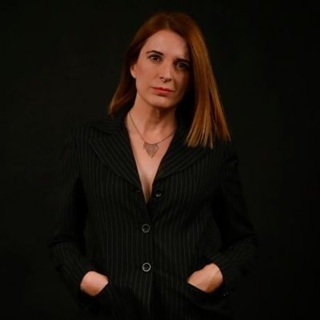

Serbian IT Experts Pioneer ‘Memento Vitae’ — A Personal AI Profile to Converse Even After Death
By Senka Miloš — August 9, 2025
Serbian IT experts have developed a groundbreaking program that transforms a person’s life into a personal AI profile—a sort of testament that descendants can interact with. Dubbed “Memento Vitae”, this innovation aims to preserve memories and family history in an interactive format.
According to IT manager Miodrag “Miša” Krunić, one of the creators of the Memento Vitae program, “humans have always sought ways to leave a legacy—from cave drawings to books, photos, and videos. Now, through an AI profile, people will be able to ask anything. They will leave behind their way of thinking. One will be able to communicate with the profile while still alive—and even after death.
The team behind this includes ten prominent Serbian IT specialists and psychologists who envisioned a more profound project than existing AI legacy initiatives. Current platforms worldwide have examples for public figures like Maradona or Churchill, but Memento Vitae goes beyond that in scope and personalization.
Program that remembers your life
To make the Memento Vitae project a success, the developers enlisted teams of psychologists and psychotherapists to create a tailored interview for those wanting to preserve memories through AI.
Psychologist and psychotherapist Tereza Moličnik, leading the effort, explains that the hardest part was crafting the questions. They organized them into three groups:
- Biographical data
- Emotions and core values (100 questions)
- Significant people and events in the individual’s life
These open-ended questions are designed to encourage deep, authentic responses—each person’s universe is unique, and the AI responds in a human-like way, prompting many to say, “Is this really possible?”.
Moličnik also emphasizes the ethical underpinnings: participants answer freely, opening up only as much as they feel is safe. Though not psychotherapy, the process often prompts participants to reflect deeply, uncovering life milestones they hadn’t noticed before. Even a question like “What is your favorite color?” pushes them to explain why the color matters to them—and the AI can connect that meaning with other facts about the person in insightful ways
AI profile with emotions
Moličnik adds that in compiling the list of questions, they adhered to all psychological principles, guided by ethics, and that people answering the questions respond as much and in the way they want. There is no obligation. They open up, she says, as much as they feel it’s safe. This is not psychotherapy, but it often happens that they realize, for the first time in their life, they are thinking about a certain topic. They recognize turning points in life they hadn’t noticed before.
“We have a question about a favorite color, but it’s not only important to say what that color is — you should also explain what that color means to you. And artificial intelligence will know how to connect that with other facts we’ve learned about that person and make a beautiful point when you ask it something about that color,” Krunić adds.
That’s why, she says, the last set of questions is very important — describing important people and events in one’s life — because our deepest emotions connect us to others:
“What we’ve learned from the ten profiles we’ve made in this way so far is that the more of yourself you invest, the more deeply and confidentially you speak in that interview, the more you will get back from artificial intelligence. And not after your death, when some of your heirs are talking, but now, immediately. If you ask it a simple question — why did I do this, make this decision — instead of the answer you give yourself to justify the decision, you get a one-sentence answer. And it really hits you on the forehead. It’s hard, but healing,” Krunić says.
A Surprising Match Between Human and Machine
So far, ten profiles have been completed. The experts also created a program that measures the match between the human owner and their AI profile—results are impressive, ranging from 85% to 90% similarity. One case even reached 90% accuracy.
Younger people are more interested in the project, whereas deeply religious individuals are more skeptical—understandable, as those uninformed might mistake AI profiles for afterlife phenomena. While loved ones can browse photos, writings, and videos, they can also ask the AI anything—an opportunity and a risk in one.
Moličnik reminds everyone that the AI is not a real person—it’s just an AI profile of that particular person. “It’s as if someone recorded a video or audio with advice, and now plays it back and listens. For some, that’s too heavy — they would never play it, and that’s fine. No one has to chat with the profile if they don’t want to. When I was invited to join this project, I asked myself all those same questions, and then I thought — would I like to be able to talk to my great-grandfather? That would be amazing! I never met him, nor my grandfather. I’m very curious about all that — to know how he thought, who his best friend was, to hear those heroic stories from the past. I see a lot of love in this. Love in leaving something behind,” Moličnik says.
Not a Substitute for a Person
Krunić emphasizes that the project is compatible with all AI platforms. While U.S. and Chinese counterparts have released similar systems within six months, and a Russian version is expected soon, “we hope Serbia will eventually have its own AI,” he adds. But these systems are designed to be harmless and not fully identical to real people—achieving 99% likeness is not the goal.
Psychologist Moličnik notes the natural resistance to new things, comparing it to how public lighting in Belgrade once sparked public outcry—fear of the unknown is normal and must be addressed with clear explanation.
“That’s how we react to the unknown. Our psyche fears the unknown, and that’s completely normal, because the brain protects us from it — in the unknown there might be a tiger. In what’s familiar, it may be unpleasant, but I survived. Everything new naturally scares us, which is why people need a good explanation of what it’s about.”
“We are not creating a person, nor a replacement for one. We are creating an artificial intelligence profile that will, in many ways, resemble that person in how they express themselves and how they think.”
AI Will Not Rule Us
Despite the rapid progress of AI technologies, Krunić believes we need not fear them: “I believe AI will surpass human intelligence in our lifetime—but it’s our child, the child of our civilization. As with any child, there’s a risk it may turn against us—but we raise it, nurture it, instill our values. When it’s capable of great things, it will do so for our benefit, not against us” .