Drawings
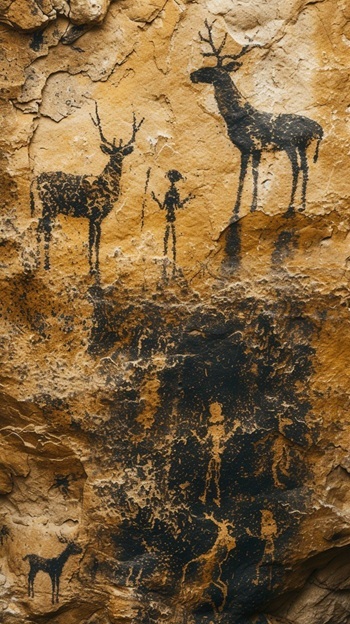
Before the writing was invented, humans used drawings to preserve what they saw and experienced, so someone in the future may relive that experience. Such drawings emerged in Upper Paleolithic period roughly between 40,000 and 10,000 years ago.
Most of the drawings from this age have been preserved in cases (like Lascaux and Chauvet in France, Altamira and El Castillo in Spain, as well as in Leang Tedongnge (Sulawesi, Indonesia) and Cueva de las Manos (Argentina)).
In most cases these drawings depict animals (bison, horse, deer) or human handprints.
The reason why our paleolithic ancestors drew such in the depths of caves are not fully known – but they probably have something to do with hunting rituals, and early forms of religion (shamanism).
Memento Vitae is about preserving one’s personality, memories and the way one sees the world.
However, the idea of preserving memories (some may say – overcoming mortality) has haunted our species for very long time, probably ever since our consciousness emerged.

Writing
The first civilizations that developed writing were Sumerians (roughly 3200 BC) and Egyptians soon afterwards.
The civilization of Indus valley developed their own script somewhere around 2600 BC, and the Chinese developed their ideograms around 1200 BC (that is the oldest script, that survived to the modern day).
The first scripts found in the above civilizations were used for practical purposes like accounting (emperors needed to keep record how much taxes each subject was paying), but also for legal (writing the law codes) and religious purposes.
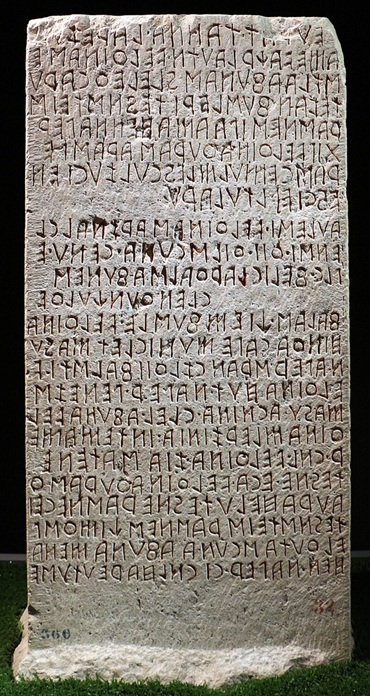
Such scripts can still be found in papyrus, clay tablets, walls and tombs.
Probably this is the first in the history of humanity when one’s whole life could be described in words, and left for his/her successors.
The first such known written biography was “The Life of Sinuhe“, from Ancient Egypt, dating to around 1875 BCE.
It describe a life of an Egyptian official (Sinuhe) who flees Egypt upon hearing of the king’s death and lives in exile, later returning home. Aside from biographical details, it contains moral reflection, political commentaries and thus based on realistic social context.
Sound / speech
Fast forward to XIX century (as you can see, we had nearly 20 centuries of no technological developments that could offer new ways for human kind to keep memories) when Édouard-Léon Scott de Martinville invented ‘phonoautograph‘ – a device which was recording the sounds visually – but in such a way that no reproduction of that sound was possible. The first recording of that kind was A human voice singing “Au Clair de la Lune”.
In 1877 Thomas Edison has made a breakthrough with his invention of phonograph, the first machine that could record and reproduce sound.
The first recorded sound was of Edison himself, reciting ‘Mary Had a Little Lamb’.
For the first time in history, we were able to preserve one’s voice – so it can be replayed even after that person’s death.
Ever since, the media where sound gets recorded have dramatically changed (from gramophone records, to audio tapes and digital carriers like CDs). Nowadays nearly all of our music is recorded and replayed in digital way, via Internet.
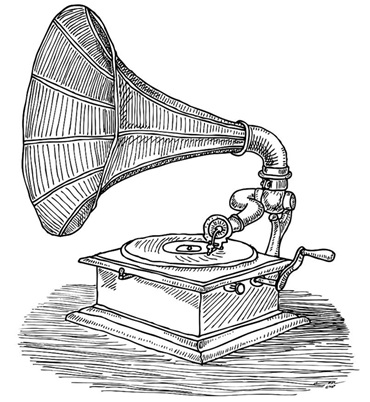
Photo / Video
n parallel with sound recording development, XIX century brought a revolution in the way we record pictures.
The first photograph was made in 1826 or 1827, by Joseph Nicéphore Niépce, a French inventor.
It wasn’t a photograph in the way we understand it today – actually, it was a process called heliography – he used a pewter plate coated with bitumen of Judea, which hardens in light. Niepce ‘photographed’ a view of rooftops and landscape from a window – from his estate in Saint-Loup-de-Varennes, France.
First permanent photo was taken by Louis Daguerre, in 1838, in Paris.
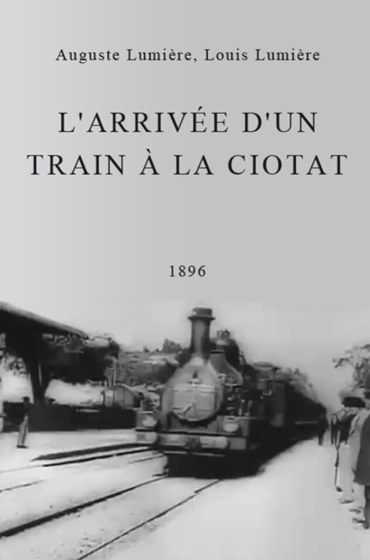
Soon enough, inventors figured out that a sequence of photographs, if played fast enough is equal to the effect of motion picture – and that is how the video/cinema was born. The first public screening took place in 1895, and it was ‘Workers Leaving the Factory’ and ‘Arrival of a Train‘ by Lumière brothers.
Pretty soon, videos (or films / movies, as majority of the worked calls them) became the main form of human expression, giving rise to multi-billion-dollars film industry.
AI
Books, sound recordings, movies – what’s next? Will there be any future format in which we can record our memories, to be replayed after we’re not around any longer?
Actually, AI offered something completely new – not only you can replay past memories, but you can ask an AI profile practically anything – and the AI profile (if taken in professional way) will respond in they style and the way of thinking of that particular person.
For the first time – it’s not only replaying – but also mimicking one’s intelligence (and one definition of intelligence is being able to find one’s way in a situation which that person did not experience before).
AI offers this revolutionary new possibility, and Memento Vitae recognized it – enabling our clients to create such an AI profile of their own.
We need to be clear – with an AI profile, we’re not recreating a human being (AI profile’s intelligence is not there yet, let alone human feelings and social behavior). What we are doing is simply using AI to mimic one’s way of thinking, one’s principles and key values. ANd that, paired with actual biographical memories of a person can result in a real good AI companion, which will resembles many characteristics of that person.
We would welcome you to explore this exciting new possibility yourself.
Instead of just being scared of AI – let’s use it. And in case of Memento Vitae, let’s use it to help us, when we need a helping hand.