
Would You Tell Your Deepest Secret to AI?
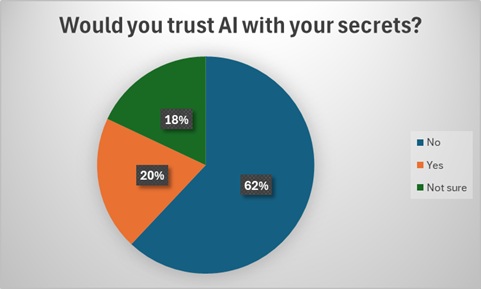
Memento Vitae recently asked a deceptively simple question across LinkedIn, Reddit, Facebook, Instagram, and X, in a form of survey
Would you trust AI with your secrets if you had no one else to turn to?
The answers paint a fascinating psychological map:
- 62% said NO
- 20% said YES
- 18% said NOT SURE
This isn’t just about technology. It’s about trust, vulnerability, and what happens when humans meet something that listens… but doesn’t feel.
Let’s unpack what’s really going on beneath those numbers.

Why Would Anyone Tell Their Secrets to AI?
At first glance, it sounds strange. Confide in a machine? Yet for many people, AI is becoming a kind of digital confessional booth.
Here’s why.
1. Zero Judgment, Infinite Patience
AI doesn’t interrupt, roll its eyes, or silently judge. You can confess something messy, contradictory, even embarrassing, and the response remains calm and composed. For people afraid of stigma, that’s powerful.
2. Always Available
Humans sleep. AI doesn’t. Whether it’s 3 a.m. anxiety or a sudden emotional spiral, AI is there instantly. No waiting, no scheduling, no “are you free to talk?”
3. Emotional Distance Feels Safer
Paradoxically, people sometimes feel safer opening up to something that cannot emotionally react. There’s no risk of hurting the AI, disappointing it, or changing the relationship.
4. Practice Before Real Conversations
Some users treat AI like a rehearsal space. They test how to phrase difficult conversations, process emotions, or even simulate advice before speaking to real people.
5. Lack of Alternatives
For some, the question in your survey is key: “if they had no one else.” Loneliness, social anxiety, or lack of trusted relationships pushes people toward AI as a last resort.
Interestingly, studies show users already share deeply personal content with AI, including mental health struggles, relationships, and even identity questions.
In short, AI becomes a mirror that talks back.
Why 62% Do NOT Trust AI
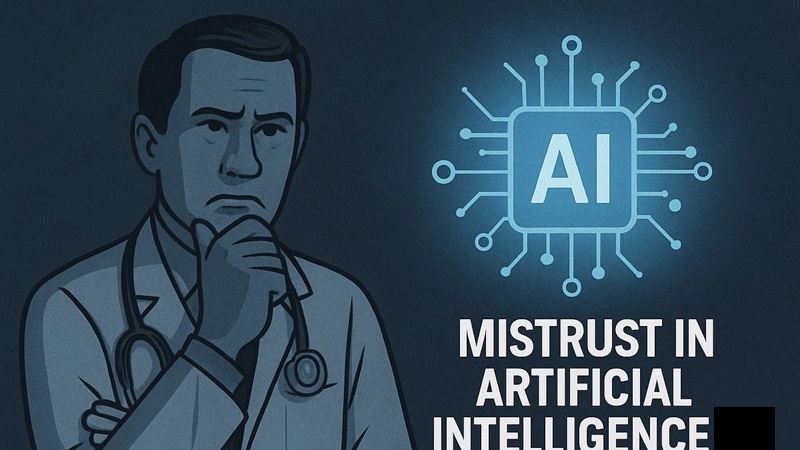
The majority response is loud and clear: No.
And honestly, it’s not paranoia. It’s pattern recognition.
1. “Where Does My Data Go?”
Most users don’t fully understand what happens after they hit “send.” Is it stored? Used for training? Seen by humans? That ambiguity creates discomfort.
2. Fear of Data Leaks
And there’s a reason for that fear.
Real incidents show how fragile the system can be:
- A ChatGPT bug exposed user data and chat history to others
- Samsung employees accidentally leaked confidential code via ChatGPT
- Millions of AI conversations were exposed in third-party platform breaches
Even when the AI itself isn’t directly at fault, the ecosystem around it can fail.
3. Third-Party Risks
AI doesn’t live alone. It relies on analytics tools, plugins, APIs, and cloud systems. One weak link can expose everything.
Think of it less like a vault and more like a house with many doors. Some are locked. Some… maybe not.
4. Lack of Transparency
People don’t trust black boxes. And AI, by design, often is one.
- How was it trained?
- What data does it remember?
- Can it “leak” information unintentionally?
Even researchers have shown that language models can, in some cases, expose fragments of training data.
5. “It’s Not Human”
Trust is emotional, not just rational. Many people simply don’t feel comfortable sharing something deeply human with something non-human.
It feels… off.
Why 20% DO Trust AI
Now comes the intriguing minority: one in five people said YES.
These users see AI very differently.
1. Controlled Vulnerability
They trust AI precisely because it isn’t human. No gossip, no betrayal, no emotional bias. Just input and output.
2. Perceived Privacy
Some believe that sharing with AI is safer than sharing with people, especially in small social circles where secrets spread quickly.
3. Tech-Optimist Mindset
This group tends to trust systems, platforms, and innovation. They assume that companies are improving security and that risks are manageable.
4. Positive Personal Experience
Trust often comes from experience. If someone has used AI for advice and felt understood or helped, trust grows naturally.
5. Emotional Relief
For some, AI already works. It helps them process thoughts, reduce anxiety, or gain clarity. That practical benefit outweighs abstract risks.
To them, AI is not a threat. It’s a tool. Or even… a quiet companion.


Why 18% Are Not Sure
This group is the most interesting. They’re standing at the edge, looking both ways.
1. Torn Between Utility and Risk
They see the value, but they also see the danger. It’s like wanting to swim but questioning the depth of the water.
2. Waiting for Proof
They’re not early adopters, but not skeptics either. They’re waiting for stronger guarantees, clearer policies, or simply more time.
3. Context-Dependent Trust
Many in this group might share some things, but not everything.
- Career advice? Maybe.
- Relationship issues? Possibly.
- Deep secrets? Not yet.
4. Influence of Media and News
Every new headline about AI risks or breakthroughs nudges them one way or the other.
They’re the swing vote of the AI trust economy.
Examples of Data Leaks from AI
Trust is fragile, and real-world incidents reinforce hesitation.
Here are some notable examples:
1. ChatGPT Data Exposure (2023)
A bug exposed ChaGPT user conversations and payment-related information to other users.
2. Samsung Internal Leaks
Samsung engineers unintentionally uploaded proprietary code and sensitive data into ChatGPT.
3. OmniGPT Massive Breach (2025)
Over 34 million conversations, including personal and business data, were leaked online.
4. Third-Party Analytics Breach
User-related data was exposed through an external provider, not the AI itself.
5. Recent AI Vulnerability (2026)
A newly discovered flaw allowed attackers to extract sensitive data invisibly through prompt injection techniques.
The pattern is still not clear: Sometimes the leak is the AI. Sometimes it’s the user. Sometimes it’s everything around it.
What is Memento Vitae doing about it’s client’s data privacy?
With us, the privacy of user’s data has always been concern #1
With ouver 20 years of experience in IT (namely data security) Memento Vitae tehnical team has taken all precautions to make sure that your data is at no risk.
Of course, as threats evolve, we also have to be vigilant, and recheck our security from time to time.
More details can be found on our Q&A page – section on data privacy.