
Insights From the Memento Vitae Survey
Artificial intelligence is no longer a distant concept discussed only in laboratories or science fiction novels. It has entered our daily lives quietly and persistently. It recommends what we read, drives how we work, influences medical decisions, and increasingly shapes how we remember, record, and preserve human experience. At Memento Vitae, where AI is used to preserve personal stories, values, and wisdom, we felt it was important to understand one simple but powerful question:
This is the 3rd survey in our series of AI-related surveys. Previous surveys can be found at
To explore this, we conducted a survey across X, Instagram, LinkedIn, Facebook, and Reddit asking respondents to identify their primary concern regarding artificial intelligence. The answers reveal not just fear of technology, but deeper anxieties about work, identity, humanity, and control. This article explores those results, what they really mean, and how we might reduce fear by reshaping the way AI is introduced and understood.
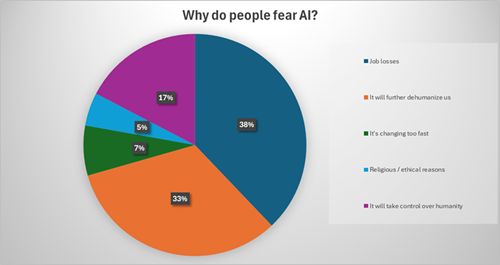
Results across all platforms combined:
-
Fear of job loss – 38%
-
Further dehumanization – 33%
- Pace of change being to fast – 7%
- Religious / ethical reasons – 5%
- Taking over control over humanity – 17%
While simple at first glance, these numbers tell a complex story about trust, awareness, and the rapidly evolving relationship between humans and intelligent tools.

Why This Survey Was Performed
Memento Vitae exists at the intersection of technology and humanity. Our goal is not to replace people, but to preserve what makes each person unique: their memories, values, voice, and way of thinking. However, we are fully aware that many people approach AI with hesitation or outright fear.
Before asking people to trust AI with something as personal as their life story, we needed to understand the emotional landscape surrounding artificial intelligence. Fear, if left unaddressed, becomes resistance. Resistance becomes rejection.
This survey was not meant to measure technical literacy or predict future adoption. It was meant to capture emotional truth. What worries people when they hear the words “artificial intelligence”? What underlying human concerns are being projected onto this technology?
The answers provide a valuable mirror, reflecting not just attitudes toward AI, but anxieties about modern life itself.
Fear of Job Losses (38%)
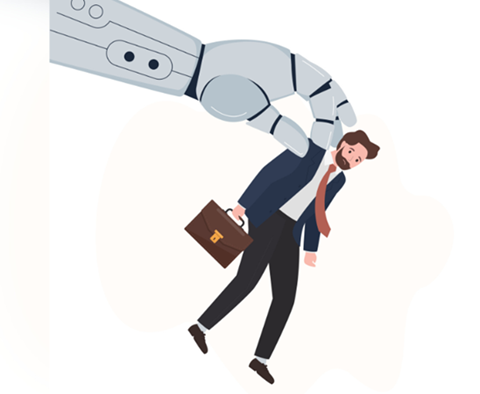
The most common concern, cited by 38% of respondents, was fear of job losses. This fear is both understandable and historically familiar. Every major technological shift has disrupted labor markets, from the Industrial Revolution to the rise of computers.
AI intensifies this fear because it does not just replace physical labor. It touches intellectual and creative work, areas long considered uniquely human. When algorithms write text, analyze data, design visuals, or provide legal and medical insights, people understandably ask: Where does that leave me?
What makes this fear particularly strong is the speed of change. Jobs that felt secure a decade ago are now uncertain. Many people feel they are running on a moving platform, constantly needing to reskill just to stay in place.
However, this fear is less about AI itself and more about economic insecurity and lack of control. When technological progress is introduced without social safety nets, retraining pathways, or honest communication, fear naturally follows.
AI does not inevitably destroy work. It changes it. The real question is whether societies and organizations help people transition, or leave them to absorb the shock alone.
Fear of Dehumanization (33%)
Closely following job loss concerns, 33% of respondents expressed fear that AI will further dehumanize us. This is a deeply philosophical fear, and arguably the most important one.
Many people already feel disconnected in a world dominated by screens, automation, and metrics. Human interactions are increasingly mediated by algorithms. Customer support becomes chatbots. Relationships become data points. Attention becomes currency.
In this context, AI can feel like another step away from warmth, empathy, and meaning. The fear is not that machines will become human, but that humans will be forced to behave more like machines.
This concern resonates strongly with Memento Vitae’s mission. If AI is used only for efficiency, optimization, and profit, dehumanization becomes a real risk. But if AI is used to preserve voices, stories, emotions, and lived experience, it can have the opposite effect.
The same tool that can flatten humanity can also amplify it. The outcome depends entirely on intention.

AI Changing Too Fast (7%)
Only 7% of respondents selected speed of change as their primary fear, but this concern quietly underpins many of the others.
AI evolves at a pace that outstrips regulation, education, and public understanding. New capabilities appear before people have time to emotionally process the last wave. This creates a sense of instability, as if the rules of the world are being rewritten without consultation.
When change feels uncontrollable, even neutral or beneficial technologies provoke anxiety. People are not given time to adapt, ask questions, or build trust. Instead, they are expected to accept constant disruption as normal.
This fear highlights the importance of slower, more transparent adoption. Not everything that can be built should be deployed immediately. Trust requires breathing room.
Religious and Ethical Concerns (5%)
A smaller but significant 5% of respondents cited religious or ethical reasons for fearing AI. While numerically modest, this group raises fundamental questions.
For some, AI challenges deeply held beliefs about the nature of the soul, creation, and human uniqueness. For others, the ethical concerns are secular: who controls AI, whose values it reflects, and whether it can be used to manipulate, surveil, or exploit.
These fears remind us that AI is never neutral. It carries the assumptions, biases, and priorities of its creators. Ethical hesitation is not irrational resistance; it is a call for responsibility.
Ignoring these concerns risks creating technology that functions well but lacks moral grounding.

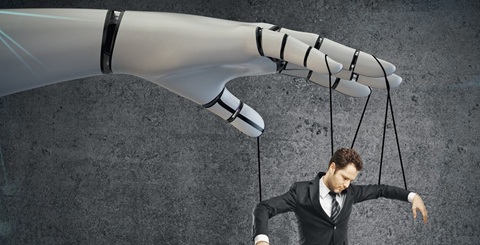
Fear That AI Will Take Control Over Humanity (17%)
Finally, 17% of respondents fear that AI could ultimately take control over humanity. This fear is often dismissed as science fiction, but it reflects a genuine anxiety about loss of agency.
As decision-making becomes automated, people worry about systems they do not understand making choices that affect their lives. Even today, algorithms influence credit approvals, job applications, parole decisions, and information exposure.
The fear is not necessarily about sentient machines rebelling. It is about humans delegating too much authority to systems optimized for efficiency rather than wisdom.
Control does not vanish overnight. It erodes gradually, one automated decision at a time.
Conclusion: How We Can Reduce Fear of AI
Fear of AI is not a single problem with a single solution. It is a constellation of economic, emotional, ethical, and existential concerns. Reducing that fear requires a shift in how AI is framed and deployed.
First, AI must be presented as a tool that serves human values, not replaces them. Second, its development must be transparent, inclusive, and ethically grounded. Third, people must see clear evidence that AI can strengthen human connection rather than weaken it.
At Memento Vitae, we believe one powerful way to reduce fear is to anchor AI in human stories. When AI is used to preserve memory, wisdom, and identity, it stops feeling like an alien force and starts feeling like an extension of human continuity.
Fear thrives in abstraction. Trust grows in relationship.
AI does not have to be something that happens to us. It can be something we shape, guide, and use to ensure that what makes us human is not lost, but remembered.
Special thanks
Our survey has sparkled some great discussions on Reddit – I have singled out the post by user Littlerob
Job Losses. This is the big one that will be most personally felt by people. Companies are already using “AI” as an excuse to do massive layoffs across multiple sectors, and that trend is only projected to increase, despite current LLMs not actually being good enough to replace human work.
The economy works like this: we all have jobs to produce the goods and services we all use, and we use the pay for those jobs to determine how those goods and services get distributed amongst us. This breaks down when there aren’t enough jobs for everyone to have one – when we don’t need people to produce all the goods and services we use. It doesn’t even need to be all of us, even just automating all the remote-viable white-collar service work would cripple the job market, even if all the primary farming and manufacturing is still 100% human labour.
Possible Future Superintelligence. This one is a bit more speculative, but getting less and less so every year. Personally I don’t think that just scaling up current GPT-style LLM transformers will ever get us to actual intelligence, but we’re probably only one or two more GPT-style innovations away from the method that will. And when we do, we’ll fundamentally change an awful lot of how the world works, because we’ll suddenly have given life to an entirely new form of intelligent mind and there’s vanishingly little likelihood that it will share our values (hell, most humans can’t even agree on what those values are, never mind share them).
Further, my special thanks also go to Ms. Natalija Tanasković for her insight into how a young professional perceives AI.